Friday, February 10, 2023

Book Review: 'A Miscellany Of Bats' by M. Brock Fenton & Jens Rydell

'A Miscellany Of Bats' by M. Brock Fenton & Jens Rydell

This book has just recently been published (January 10, 2023) by Pelagic Publishing. It's currently available in paperback, and electronic format (Amazon Kindle).

The book is 256 pages in length; and it measures 24.4 X 17.0 X 1.91 Centimeters. 

As always, I advise you to shop around for: Best price, and delivery times. See link to NHBS below:


I was very anxious to receive my copy! Had I known that it was going to contain such stunning photographs, I would've been even more impatient!

In an effort to not divulge too much about the book itself, I will focus on the items which I found particularly interesting.

It arrived from the publisher's very well-packed & protected. For starters, when I first thumbed through it (just quickly, mind you) - I couldn't help but notice the amazing photos. Many of which are breathtaking. 

The other factor which becomes obvious after a short time, is that this book is meant to be read through - Not just to be referred to. In other words, it isn't strictly a (non-fiction) resource on bats.

Table of contents:

1. Introducing bats

This first chapter covers catching, IDing, marking & tagging bats (pages 5-7). Being a mothing enthusiast for many years myself - I was happy to learn that Jens Rydell started as a moth collector (page 19).

2.Bat wings and flight

Covers bat wing anatomy, and facts related to the way bats fly.

3. Seeing with sound

An excellent chapter, providing an easy to understand introduction to the ways bats use echolocation. Wonderfully presented.

4. Echolocation: a window onto bat behaviour

One of my favorite chapters - provides further details, and even more interesting information on echolocation. Also, a rare glimpse at what detectors look like in the early 1980's! Absolutely loved it!

5. What bats eat, part 1

There are facts and illustrations in this chapter which are simply amazing! The diet of bats is described, as well as the fascinating tactics they use, to acquire their food items of choice.

6.What bats eat, part 2

This chapter mostly deals with bats which eat items other than small insects. Similar to part 1, but in an even more concise and captivating manner.

7. Vampire bats

A slightly shorter chapter than those which preceded it, but rest assured - you will learn some facts which you were completely unaware of! You'll come to understand these enigmatic bats in a different light.

8. Where bats occur and where they roost

In this thorough, and wonderfully illustrated chapter - The reader will again learn many unique facts about where, and how bats select and use roost sites.

9. Social lives of bats

Here, the reader will learn about mating, reproduction, and the social behaviors of bats.


10. How bats use space

At 1st glance, the reader might think this chapter is about how bats use confined space(s) - In actuality, this is not the case. This chapter brings to light several unique facets of their habits (as discovered through research/study).
And I'll leave it that (as a surprise!).


11. Threats to bats

Here the authors cover all of the current threats to the survival of the world's bats. Beginning with natural threats, predators, et cetera; and moves on through to man-made threats: Such as wind farms, etc.


12. Bats and people

This was a concise but very enjoyable chapter. It covers the various relationships between bats and people throughout history. Fascinating and wonderful stuff!


13. Bats as beings

This last chapter, deals with the most fascinating facts - which scientists have learned about bats (relatively recently). The interesting and formally unknown activities of bat species, which recent research has brought to light.


I suppose what's most obvious about this book, is it's suitability and appeal to those with an interest in bats, at just about any level (except perhaps for young children?).
This book would be good for beginners/newcomers, students, as well as experts on bats.
I considered it a valuable book as soon as I saw that M. Brock Fenton was one of the authors - Having read several of his papers, and other examples of his work over several years. For anyone keenly interested in bats, not much more needs to be said about M. Brock Fenton.
I will take this opportunity, to point out - That Neil Middleton had the privilege of interviewing him, for The BatAbility Club (viewable to members only).
I must confess, that I was mostly ignorant of Jens Rydell's work until now. I was very sad to learn of his recent passing. The set-ups he used, to capture such awesome photos of bats in flight, were truly awe-inspiring. And the resulting photographs of bats in flight speak for themselves.

Again, this is a book which you'd sit down, read through; and enjoy! Chapters 3 and 4 essentially provide the reader with a very good basic understanding of: echolocation, the recording of bat calls, and spectrograms.

What I really liked:

The book was easy and pleasurable to read - I learned some very interesting facts about bats which I wasn't aware of.
It would also be a very useful addition to any public library.

What I would've liked to see:

Personally, I would have liked to have seen: More bat detectors, and more details about bat detectors... Because, well...I happen to have an obsession with bat detectors.
Honestly, beyond the preceding, partly tongue-in-cheek comment - I can't find any fault with this book. And would recommend it to anyone, with just about any level of existing knowledge of bats. This book will quickly bring someone up to speed on the fascinating natural history, and behaviour of bats.


The next review, will be of a bat recorder you've most likely never heard of—That's about to change... As with the TeensyBat 4.1, just recently reviewed here on the blog — it is also primarily a DIY detector. However, there is also an effort being made, which will allow Folks to purchase this detector already built, and flashed (programmed) and ready to go. That is about all I'm going to say about it for now. But I have been looking forward to reviewing it. Both for the BatAbility club as well as here on the blog, and sharing it with everyone!

Until next time,
Happy bat detecting!

Thursday, February 2, 2023

The Song Meter Micro - From Wildlife Acoustics - Another Quick Look

The Song Meter Micro Revisited

A good, inexpensive, static recorder for recording Winter wildlife.

So, in addition to taking this Winter/down time to analyse all the bat recordings we've accumulated, what else are we doing?

Well, if you're like me, you also don't want to miss any neat wildlife sounds still occurring during the cold weather; but how?

Unattended sound recorders like The Micro, are a big help in such situations. Primarily, because of their customizable features. 

First we must consider a couple of factors... Such as where you live, and whether or not you have access to areas where wildlife vocalize. As for urban wildlife sound hobbyists - I have not forgotten you! Nor, have I forgotten how difficult it can be, to capture clean recordings of animal sounds. It's not easy while living in/or close to a city - but it certainly can be done!

In my particular situation, at the start of this Winter, I've had occasions when I could hear coyotes (and sometimes foxes) vocalizing at night. By my estimation, I would say their location was at least 100 meters away. 

I immediately started thinking: how am I going to capture these sounds? I'll run down the thought processes I went through:

  • Get a shotgun microphone?
  • An inexpensive (affordable) field recorder using it's built-in (X-Y) microphones?
  • Maybe a good field recorder with a shotgun?
  • Possibly a good-quality trail cam?

Enter The Micro!

Yes, there are other options out there as well...but we won't be discussing them at this time.

Note: The Song Meter Micro's Quick Start is located right at the beginning of the User Manual.  

I have written a full review of The Song Meter Micro, which may be read Here. Perhaps of even greater interest: There is also a full, webinar/presentation review of this unit; viewable to Members of The BatAbility Club.

Also note:
  • The Micro allows a wide range of recording schedules/flexibility. 
  • Wildlife Acoustics has excellent Customer Service & online resources available.
  • Wildlife Acoustics provides a handful of silica gel packs with the unit.

The next review (coming soon) will be of the recently released book 'A Miscellany Of Bats'

Followed by a review of The TeensyBat (Ver. 4.1) DIY bat detector. Webinar/presentation review is already up and available to members of The BatAbility Club.

Until then,
Happy sound recording!

Monday, January 2, 2023

Some Random Thoughts, Progress Updates and Other Marginalia

Just some random thoughts, progress updates and other marginalia.

Happy New Year! 

Update Post - Late-December/Early January Activities - I apologize for not posting more frequently, I originally intended to - but frankly, my chronic pain has been getting the better of me lately.

I'm happy to report that coyotes, barred owls, great horned owls, and others have been heard vocalising in my area. My attempts at recording with just a Zoom H1n portable recorder, produced less-than-stellar results (pretty dismal in most cases). Being limited to using only the built-in Mics; this was to be expected.

I was working on raising funds for a decent shotgun microphone. I've always wanted to get a Rode NTG-2. Ever since I reached out to the author of this book:


I wanted to find out exactly which equipment he used, to produce the excellent recordings of singing insects on the included CD. The microphone used, was the Rode NTG-2; along with a Marantz digital field recorder (one of the no longer produced PMD-661's).

Note: If you try to track down the Marantz PMD-661 (as I have) you'll only occasionally see one pop up on eBay. And unfortunately, it's not common to find one in excellent -to- very good condition.

As for currently available handheld digital recorders, the Zoom H5 seems like just the ticket, to pair with just about any microphone. 

I've been researching, as well as building:

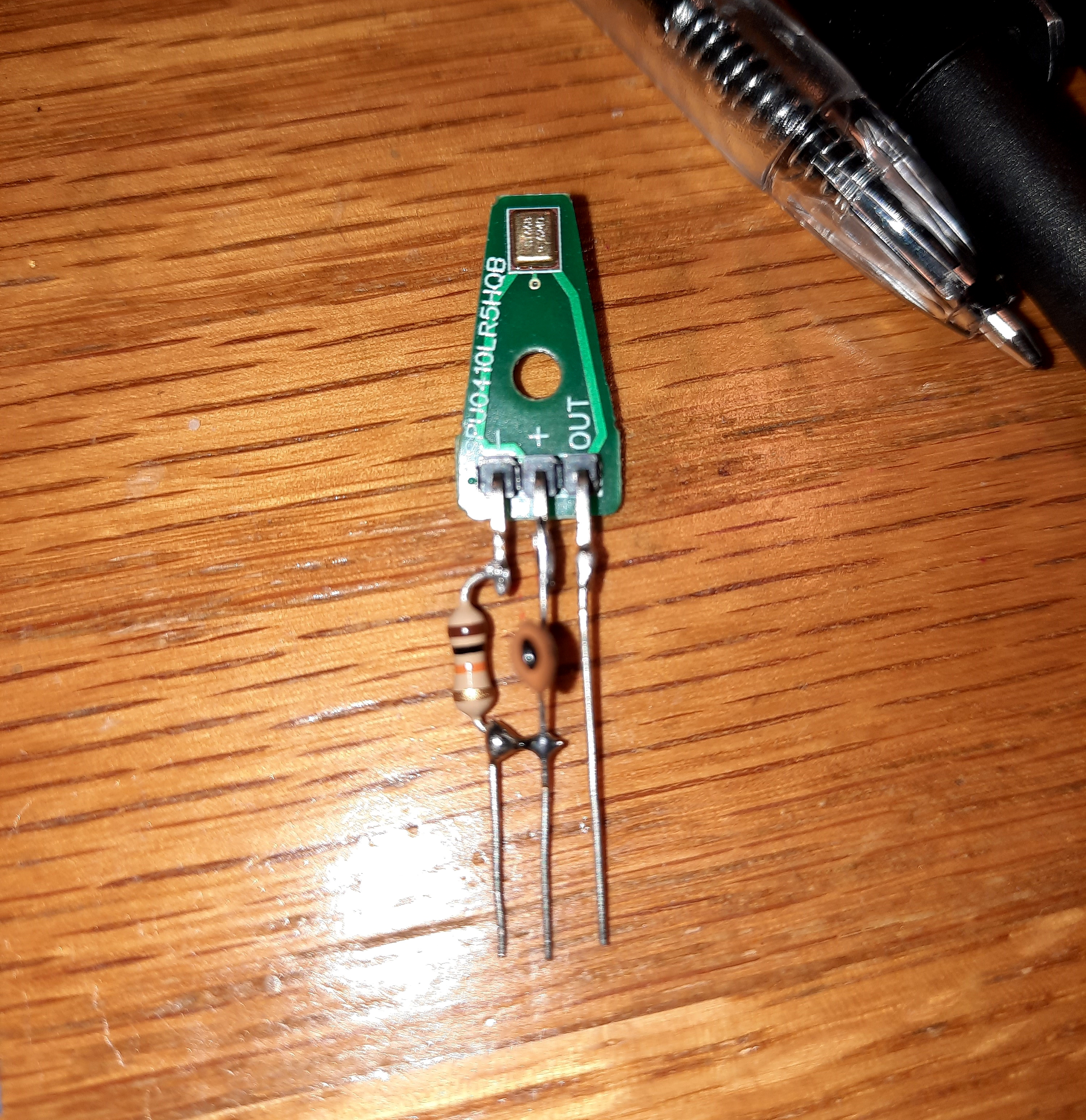
  • Several DIY ultrasonic microphones (nothing fancy or too noteworthy yet).
  • A couple of audible-range microphones (again, nothing special/noteworthy).
  • Simple amplifiers for the above Mics.
  • DIY Amplifiers specifically for hydrophones.

I'd done a bit of "research" on DIY hydrophones as well; and the Zoom H5 is mentioned favourably whenever the subject of hobbyist-level hydrophones is discussed. In some cases, even when the discussion involves Pro-level hydrophones.

Also, I've been keeping busy trying to build a (working!) DIY bat detector kit... I can't share much about this particular recorder yet. What I can tell you about it is:

  • I've only assembled 2 so far; of which only one was successful (mea culpa).
  • It uses SMD components (tiny, surface mount components). I will point out, that having only minimal experience with these parts before - delving into the technology has been fun! It's nice to know that all those years of building scale models wasn't for naught!
  • It's a stand alone/static recorder type. Very much like The Audiomoth.
  • I've got the parts to build three more.

But I'm not at liberty to discuss it here (yet). If and when the developer of the unit gives me the green light, I will post about it here profusely...but not until then (I hope you're reading this, Phil!).

Generally speaking, it's been a case of "Necessity being the mother of invention" here lately... Well, sort-of. That's the best analogy I can think of at the moment.

I've been very interested in obtaining some (decent-quality) recordings of my local wildlife. So, again, I've been looking very closely at the currently available devices which would enable me to do this. After some early attempts with the Zoom H1n, I thought it would be ideal, to write a post, comparing the static recorders (under a certain price point). This is still in the early stages, but in progress.

So, Wildlife Acoustics were kind enough to send me a Song Meter Micro, to help in my quest - and in my comparisons of - Static (primarily non-bat), recorders. As many of you are already aware: The Song Meter Micro is a very versatile, and easy to deploy unit. It's also very affordable.

So, in other news - I will be presenting a live webinar review of The TeensyBat 4.1 DIY bat detector kit; for BatAbility Club. This will be on the 16th of January. And viewable by club members (both live, and later in recorded format).

The TeensyBat has turned out to be not only unique; but very capable and versatile. I've also purchased one of the additional (round) DIY Mics, sometimes available on the TeensyBat site (Parts section). I'll be building an external microphone with it, to be tested with the TeensyBat, and other recorders. Hopefully, to include one of the latest AudioMoth units as well! 

I'll eventually be sharing the results of my tests, here on the blog. As well as a fully detailed review of The TeensyBat itself.

There will be a good assortment of topics and discussions here soon (mid to late January) and I hope that you'll find them interesting & enjoyable!

So, until next time:

Happy New Year! And happy bat detecting! 

Saturday, December 24, 2022

Happy Christmas!


(All credit to the Author/developer: Phil Atkin)


Merry Christmas and Happy Holidays to all!


Regular update post coming soon...

Monday, December 12, 2022

Excellent Online Resource for Bats of The US - Online / Zoom Courses available!

Some exciting news: I've finally found a wonderful resource especially for bats of The USA!

Until now, online training courses focusing on American bats have been practically non-existent!

They are Vesper Bat Detection Services based in Fort Collins, Colorado; founded & headed by Donald Solick.

They offer online courses and workshops! Check them out Here!

For those in the Northern hemisphere, Winter is a great time to work on your bat sound analysis skills.

And for those in The British Isles - There's simply no more comprehensive online course (for UK & European bats) than BatAbility Club's current offering!

They also have a grading option, which is awesome!

Until next time, Happy sound analysis!

Tuesday, November 29, 2022

General Thoughts About Active (handheld) Bat Detectors Part 2 of 2

General thoughts & Considerations About Bat Detectors Part 2 of 2


"Ah, but a man's reach should exceed his grasp,

Or what's a heaven for?"

-Robert Browning


What happened was: Once I had The SSF BAT3, and The TeensyBat 4.1 both up and operational:

From left to right: 
SSF BAT3, TeensyBat 4.1, EM Touch 2 Pro (on Kindle tablet).


It occurred to me, that there's one detector which would "fit right in" - The EM Touch 2 Pro.
However, having reviewed The Pro 2 here once before, meant I'd have to make a nuisance of myself - by reaching out to Wildlife Acoustics again, and explaining my intentions... Luckily, they agreed to send me a loaner.


SSF BAT3, EM Touch 2 Pro, TeensyBat 4.1 kit

 
Again, the line-up consisted of: The SSF BAT3, The TeensyBay 4.1, and The Echo Meter Touch Pro 2.

Bottom line: In the end, I decided that The EM Touch 2 Pro from Wildlife Acoustics comes out the overall winner.

The fundamental reasons why are:
  • Excellent performing microphone (sensitive, accurate, and good range).
  • Auto ID of bat species.
  • GPS tracking.
  • Stores full spectrum recordings for later analysis. 
  • It's as dependable as the device it's attached to (cell phone/tablet).
  • Recordings of particular interest, may be accessed & sent to your laptop, for in-depth analysis (fairly quickly & easily).

Performance-wise: 

The Echo Meter Touch 2 Pro from Wildlife Acoustics provides a comfortable listening experience - Featuring the choice of listening with either: RTE (Real Time Expansion), Het (Heterodyne), or TE (Time Expansion).

Microphone sensitivity, pick-up range, and ability to produce good/clear (legible) spectrograms:
The TeensyBat 4.1 was easily the equal of The EM Touch 2 Pro; which is impressive. 
In addition, it's ability to pick-up ultrasounds off-axis was superior (to either of the other two detectors).

The TeensyBat 4.1 also has a fairly unique 'Live Time Expansion' mode - Which is interesting, as well as pleasing to monitor (via ext. speaker). Especially if you're a fan of using time expansion mode. I won't go into it here (you'll have to wait for the TeensyBat review); but I felt compelled to mention it.

Now: Having said all that - Why exactly was The EM Touch 2 Pro the clear winner?

Well, in addition to the 6 bullet points which I listed above...There is a matter of an inconvenient drawback, on the part of The TeensyBat: It cannot record bat passes unattended. Not in a neat, automatic, and orderly fashion anyway.

Explained in another way: A TeensyBat user must be ready to press the Record button when a bat pass is being picked-up, and press the button again to stop the recording. 
In other words, a user needs to continuously attend to the Record button. If not, you can easily end up with very long (and large) recordings; with bat passes being few & far-between. I don't have to further explain how frustrating this can be when you're back at your laptop.

This is in contrast to The EM Touch 2 Pro's ability to: Automatically record a bat pass, stop when the bat is gone, save it, and go back to active monitoring. 
This results in a collection of neat recordings. With those having recorded ("confirmed") bat passes being conveniently marked with the yellow bat icon, which many of us are familiar with.

So, what happened after all these tests? I remembered that there's another, excellent (USB-based) bat detector - which would be an awesome prospect for this comparison! The U384 from Pettersson - It also fits in with it's affordable price point, as well as it's wonderful performance!

The U384 - USB based Bat Detector
As I'd received it for review
(directly from Pettersson)


A closer look at The U384, 
   with the 
included USB adapter.


As you can tell, this topic of discussion has the potential to get out-of-hand! All I'll say at this point in time, is that I recall the excellent performance of this Pettersson unit when I reviewed it. And I firmly believe that The U384 would do very well if it were a part of this detector comparison. I may elaborate on this in the future.

As a side-note: I've been doing quite a bit of experimenting with several external ultrasonic microphones. I'll be sharing all the geeky goodness here on the blog, in the future via Pics, etc. 

Just a sneak peek for now!


😊


So...I'm looking forward to ordering myself an AudioMoth 1.2.0, in the near future. They aren't in stock/available at the time of this writing, but have patience...

*Note: The Echo Meter Touch 2 Pro's are back in stock at Wildlife Acoustics.


Also, at the time of this writing, TeensyBat 4.1 kits are also back in stock.

Spectrograms will be added to this post in the near future. As alluded to earlier: Locating bat calls to create spectrograms of (from TeensyBat recordings) has been rather time-consuming... 

Until next time,

Happy bat recording analysis!

Unless you're enjoying the unseasonably warm Winter The British Isles is having - In which case: Happy bat detecting!
 

Wednesday, November 23, 2022

General Considerations About Active (handheld) Bat Detectors Part 1 of 2

In this 2-part post, we'll address the question: Which bat detector to get?

More specifically...Which detector for under $400 / €400?

Recently, there was a period of about 2-3 weeks, when I actually found myself without a single bat detector! Yikes! It didn't take very long for me to begin panicking...My thoughts turned to - which bat detector should I buy for myself?

So, in an effort to compensate (?) I ended-up ordering two, within a very short time frame. ...Fast forward about two weeks (for the small parcels to clear Customs, etc.): And I'm now working on finishing up the testing, and reviewing, of both The SSF BAT3 and The Teensybat 4.1...

...Now, these 2 detectors needed to be purchased by me, (at full retail price) using my own funds. For those who missed earlier posts, the reason why is: Both organizations are not-for-profit. 

This added an interesting element to the entire process. And allowed me to fully consider the question of: Which bat detector would I want to own myself? So, first let's get something out of the way - I'm not a professional Bat Worker (yet! - we all need goals...). As much as I sometimes like to imagine myself as a Professional Bat Researcher, I'm not. 

I'm a hobbyist (perhaps a rather advanced hobbyist) but a hobbyist none-the-less. So, exactly which bat detector would I like to actually own? - Or, eventually own (if I had the patience to save up some money). 

So you hobbyists, and advanced-level hobbyists out there: This post should be of great interest to you!


Sensitivity & Pick-up range:

The TeensyBat 4.1 Kit on the left - The SSF BAT3 on the right.

Aside from having two new, and interesting bat detectors to review for my readers. There was a serendipitous consequence as well: I was actually "forced" to take a hard look at exactly which bat detector I found to be most desirable; when considering one for regular nightly use.

To address this fairly, I had to carefully consider bat detectors which were priced at about $400 US dollars or below. Just for grins, let's also imagine (for a moment) that I had resigned myself to owning just one detector (a crazy thought, I agree!).

I will share the first considerations which came to my mind:

  • It needs to be robust and dependable.
  • It should provide recordings which can be analyzed later, to confirm species.
  • It should be of good quality/good microphone, with excellent pick-up range.
  • Further to the above: Good sensitivity, adjustable gain, and at least one filter.
  • GPS tracking would really be nice.

The bat detectors which I carefully considered were:
  • The SSF BAT3   --- Approx. $400 USD
  • The Teensybat 4.1 kit (needed to build it first)   --- Approx. $200 USD
  • The Echo Meter Touch 2 Pro   --- Approx. $349 (+ any shipping)
  • The Pettersson U384*   --- Approx. $321 USD (with shipping to The US)

*Consideration of The Pettersson U384 USB-based detector came much later on. More on this later in Part 2 of this Post...

In this particular post, I won't go into a lot of specifics, or detailed comparisons, etc. (which will be addressed in the Post following this one). What I will state, is that I gave each of these a lot of careful consideration.

To be continued...

Until next time,
Happy bat detecting!

Tuesday, November 22, 2022

The Upcoming AudioMoth Conference! Starts Nov. 28th

A temporary post, to remind everyone about the AudioMoth Online Conference coming up.

It's presented by Barbastella Academy.

The cost has been recently discounted - Learn more and sign up Here.

(I got my ticket!)

I'm determined to test and review the new AudioMoth (1.2.0) here in 2023!

Review: The Pippyg 2 from Apodemus Part 1 of 2

Apodemus Pippyg2 Review: An Affordable Full-Spectrum Bat Recorder The new Pippyg 2 Full-spectrum ultrasound detector, is an updated and impr...